What we look at
- Shingle condition: granule loss, curling, cracking, and missing or creased tabs.
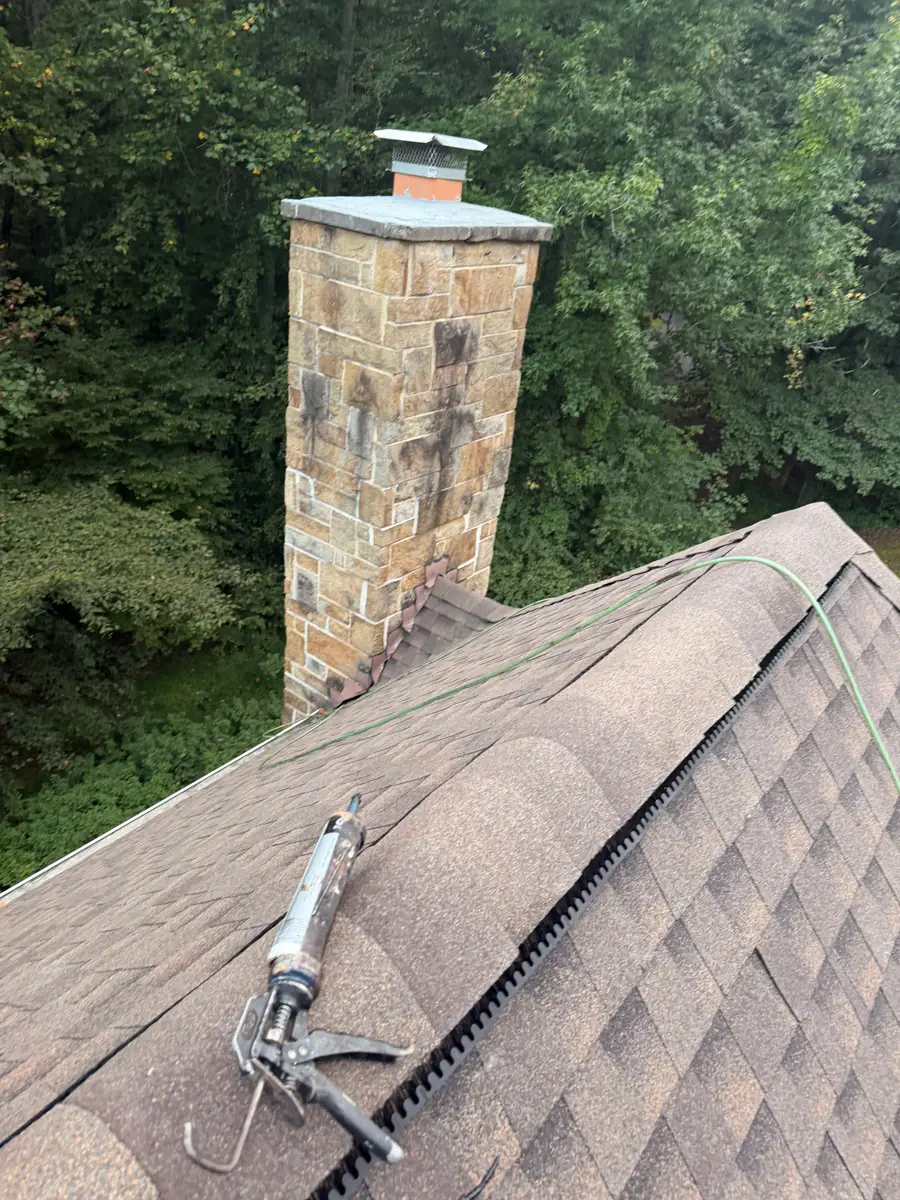
- Flashing at walls, chimneys, skylights and valleys.
- Pipe boots and other penetrations.
- Ridge and exhaust vents, and signs the attic isn't breathing well.
- Roof edges, drip edge and how water leaves the roof into the gutters.
- The attic, where it's safe and accessible: stains, daylight, damp insulation.
When an inspection is worth it
The common reasons we're called out in Centreville: a ceiling stain, shingles in the yard after a windy night, a roof that's somewhere around 20 to 30 years old and showing it, or an association letter about the roof's appearance. Buyers and sellers ask too, because a roof on a 1990-era house may be original or may have been replaced once already, and nobody remembers which.
Townhouse inspections
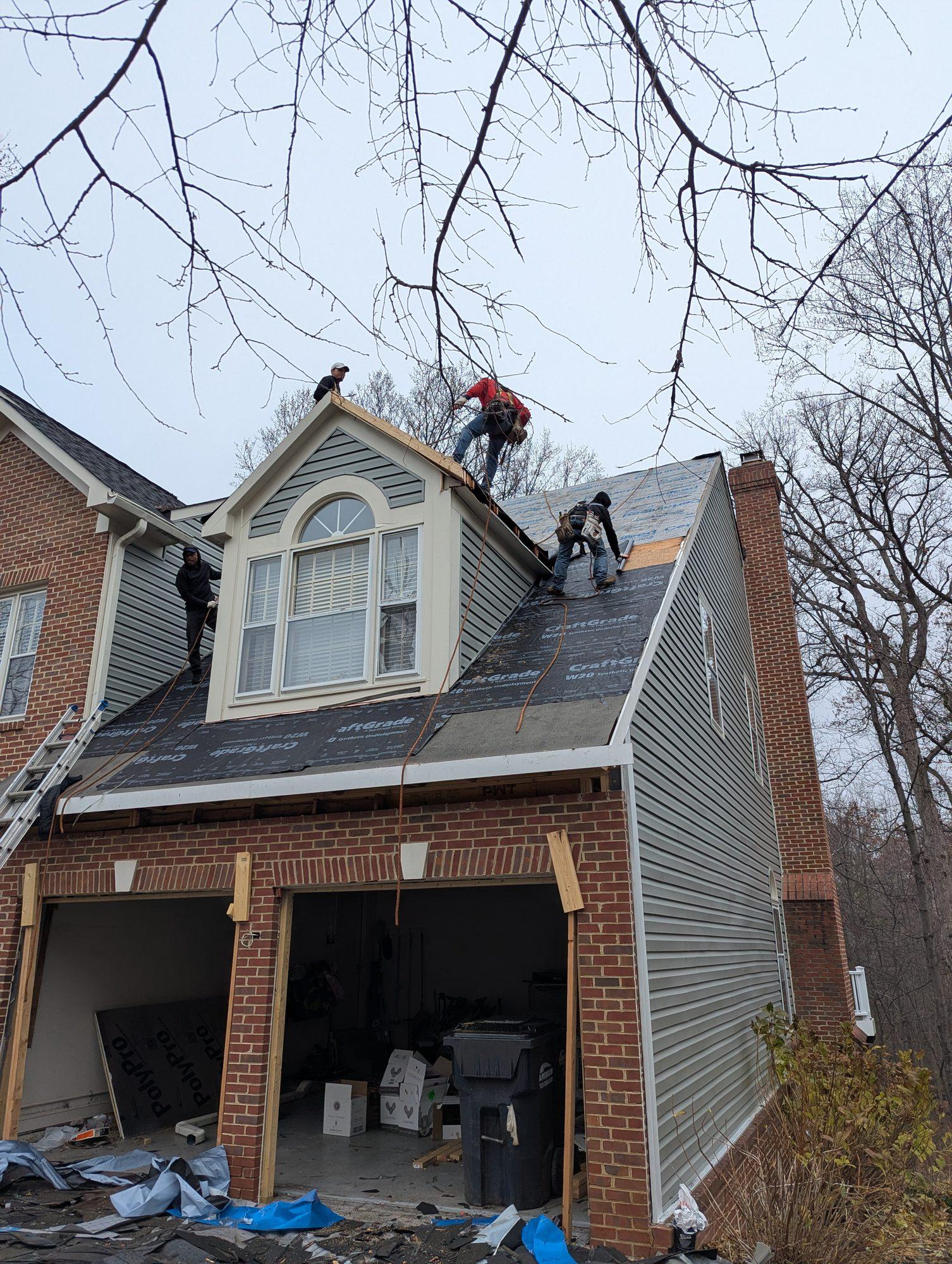
On an attached home we look closely at the lines between units: the seam where your shingles meet the neighbor's, wall flashing where a taller unit meets a lower one, and whether the neighbors' sections are in very different shape from yours. That last point matters because a row with roofs of mixed ages leaks most often at the joints. We'll tell you what we see on your section and what we can see from it next door, without overstepping onto a roof that isn't yours.
What you get afterwards
A plain answer: repair, replacement, or keep an eye on it. If work is needed, you get a written scope listing what's included. If the roof is fine, we'll say so. Our process page explains how the inspection leads into the scope, and the estimate guide explains the visit itself.
What an inspection tells you about age
Many Centreville homes were built around 1990, the median year built in Census Bureau survey data for the community. That puts a lot of roofs either near the end of a first shingle roof or partway through a second one. An inspection can usually tell which: the shingle type, how many layers are visible at the edges, and the condition of the flashing all hint at the roof's history. That history matters, because a second layer over an old one changes the tear-off and the cost.
How to prepare
- Note where and when any leaks appear, with dates and the weather.
- Find any paperwork from a previous roof replacement, if you have it.
- Make sure the attic hatch is reachable.
- On a townhouse, know your association's contact and whether it handles roofs.
- Have your questions written down; the visit is the time to ask them.
Inspection before buying or selling a Centreville home
A roof is one of the most expensive items a home inspector flags, and one of the hardest for a buyer to judge. If you're buying, a roofing-specific look can tell you whether a worn roof needs a repair now or a replacement soon, which is useful when you're weighing an offer. If you're selling, knowing the roof's condition ahead of time avoids surprises in negotiation. On a townhouse, it also helps to know whether the association or the owner is responsible for the roof before you commit.
Related pages
Do you go into the attic?▸
Where it's safe and accessible, yes. The attic often shows leaks, ventilation problems and damp insulation that you can't see from the roof.
Will you tell me if I don't need a new roof?▸
Yes. If a repair will do, or the roof is fine for now, that's what we'll tell you.
Can you inspect just my section of a townhouse roof?▸
Yes. We'll focus on your section and point out anything at the shared seams that affects it.
Talk to a roofing company that has worked in Centreville
Call (703) 731-9208 (Monday – Saturday, 8:30 AM – 6:00 PM) or use the request-an-estimate page. The estimate is free and written, with no obligation to move forward.
Request an Estimate