Why attic ventilation matters
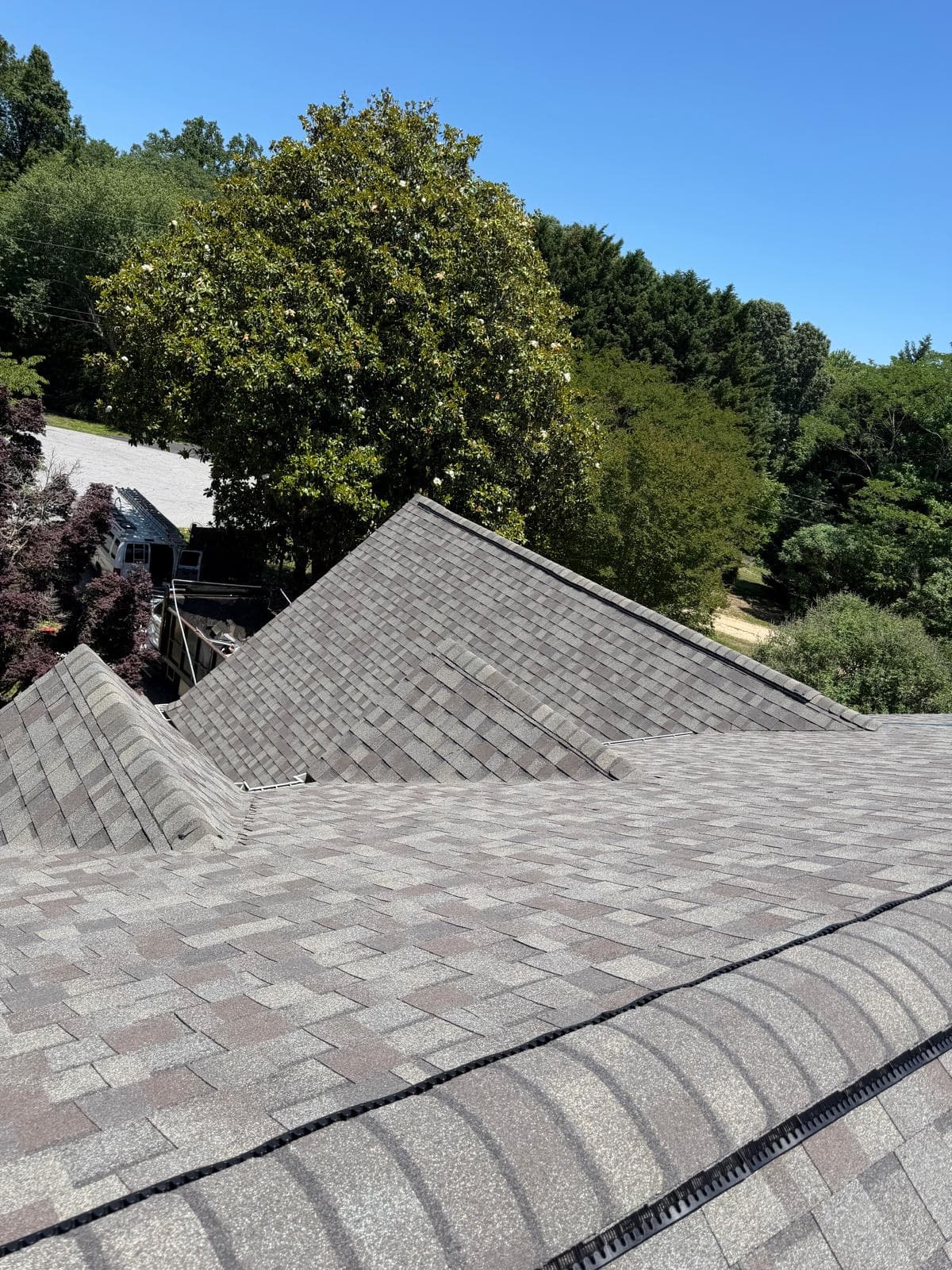
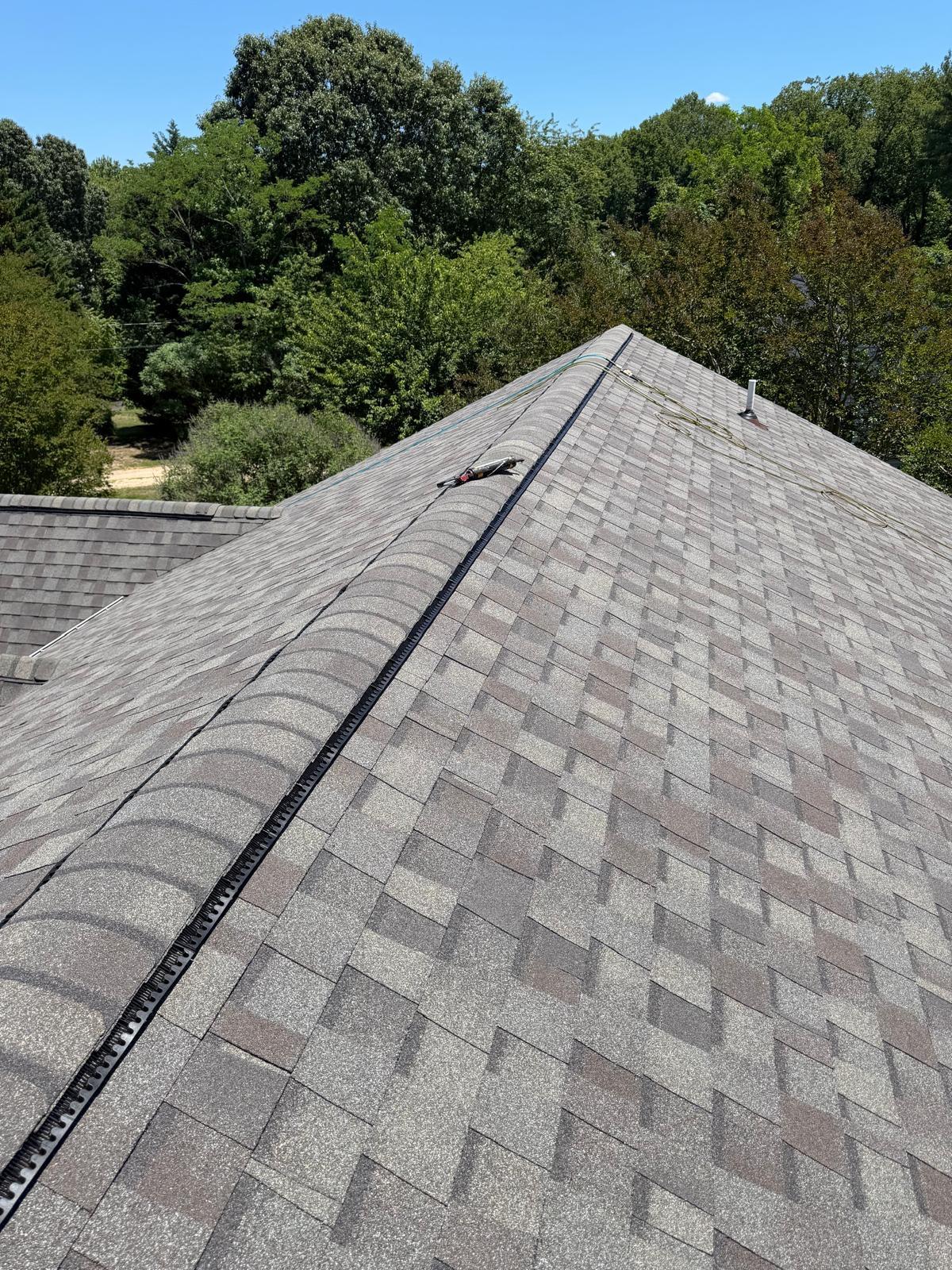
A ventilated attic pulls air in low, usually through soffit vents, and lets it out high, through ridge or roof vents. In a Northern Virginia summer that airflow keeps heat from building up under the shingles; in winter it carries moisture out before it condenses on the underside of the deck. When intake is blocked by insulation or exhaust is undersized, you can see it: frost or damp on the deck, musty smells, and shingles that age faster than they should.
Ventilation on Centreville townhouses
Townhouse attics are small and divided by the walls between units, so each unit usually has to ventilate on its own. Many have limited soffit area at the front and back and no side eaves at all. That makes it worth confirming, during any re-roof, that your section has both intake and exhaust and that new insulation hasn't covered the soffit vents. A ridge vent on your section only works if it has air coming in to replace what leaves.
Roof edges and gutters
Drip edge along the eaves and rakes directs water into the gutter and protects the edge of the deck. When we work on a roof we look at how water leaves it: whether the drip edge is present and sound, whether the shingles overhang correctly, and whether the gutters are clogged or pulling away. Roofing Roughnecks installs Leaf Relief gutter guards, which keep leaves and debris out while letting water flow. Our townhouse gutters guide covers downspouts and the shared-gutter questions that come up on attached homes.
Ventilation as part of a replacement
Every full replacement we scope includes a ventilation review. With the old roof off, it's the easiest time to cut in a ridge vent, replace damaged vents, and confirm intake. Doing it later means disturbing a new roof.
Signs of a ventilation problem
- An attic that feels very hot on summer afternoons.
- Frost or droplets on the underside of the roof deck on cold mornings.
- Musty smells, or dark staining on the deck or rafters.
- Insulation that's damp or compressed near the eaves.
- Shingles that are curling or losing granules earlier than their age suggests.
None of these alone proves a ventilation problem, and some point to bathroom fans or dryer vents exhausting into the attic instead. That's one reason the attic is part of our roof inspection where it's safe to get into.
Bath fans and dryer vents
A common cause of attic moisture has nothing to do with the roof vents: a bathroom fan or dryer duct that ends in the attic instead of outside. Warm, wet air dumped into a cold attic condenses on the deck, and the result can look like a roof leak. During an inspection we look for ducts that stop short. Correcting them may fall outside a roofing scope, but it's important to know before you blame the roof.
Related pages
How do I know if my attic is poorly ventilated?▸
Common signs include a very hot attic in summer, frost or damp on the underside of the roof deck in winter, musty smells and shingles that wear early. An inspection can confirm it.
Do you install gutter guards?▸
Yes. Roofing Roughnecks installs Leaf Relief gutter guards.
Can ventilation be fixed without a new roof?▸
Often, yes. Vents can be replaced or added and blocked soffits cleared. A replacement is simply the easiest time to do it.
Talk to a roofing company that has worked in Centreville
Call (703) 731-9208 (Monday – Saturday, 8:30 AM – 6:00 PM) or use the request-an-estimate page. The estimate is free and written, with no obligation to move forward.
Request an Estimate